
The relationship to material is essential in my work. Indeed, the simplification of form leaves room for the sensory qualities of the material to express themselves: the visual aspect, but also touch, and even smell. Each material I work with has its own particular sensory character, and pairing materials together creates a kind of sensory dynamic, where the contrast between materials allows their respective charm and qualities to be felt more fully.
Steel
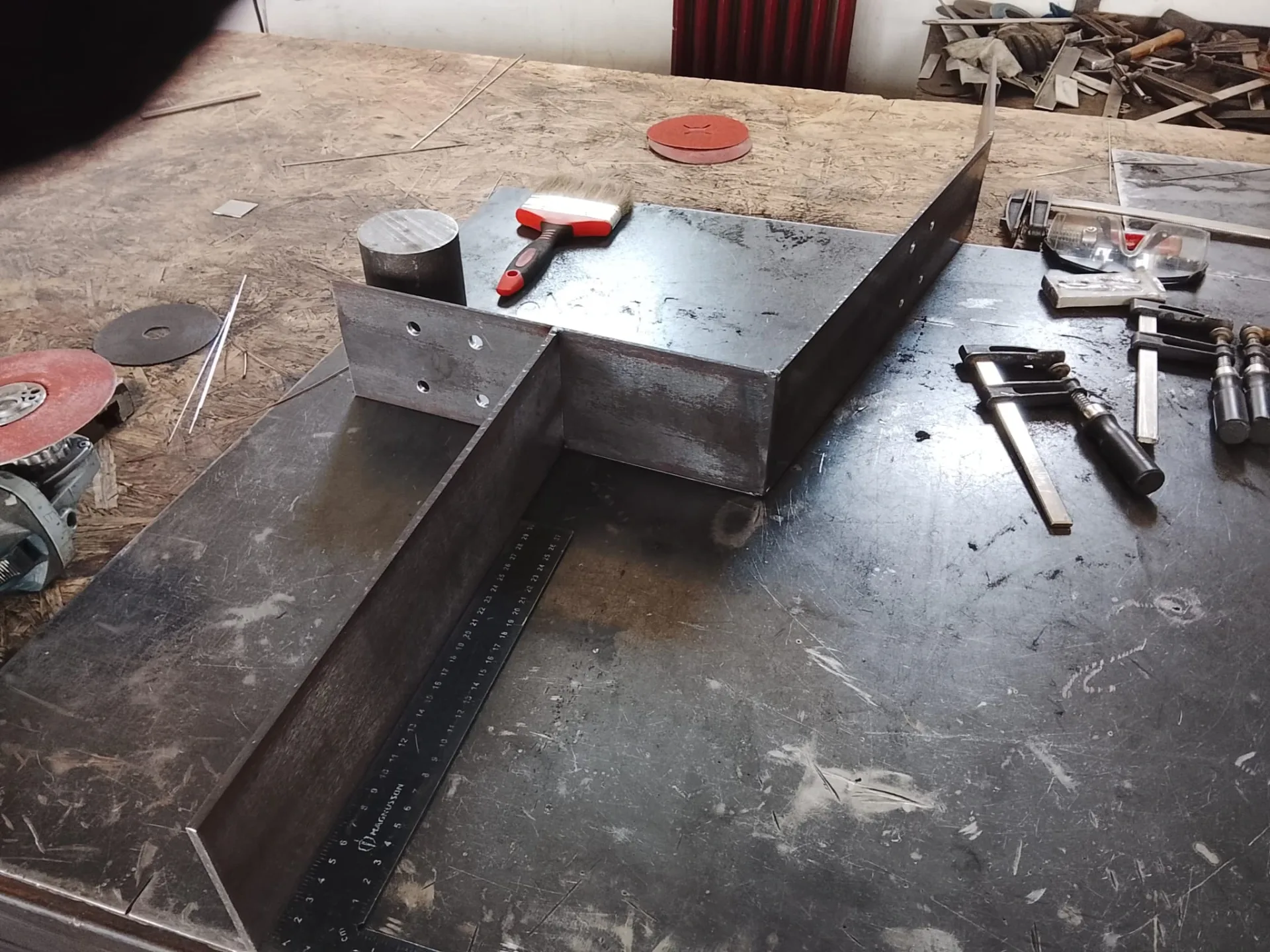
Steel is a material that finds its place in almost all of my creations. The rigidity and mechanical strength of steel make it possible, with very little material, to create a structure for a piece of furniture. Just as the human body is made up of rigid parts (the skeleton) and "soft" parts (muscles, organs, skin, etc.), I approach a piece of furniture as being composed of a metal structure supporting elements made of a more fragile material (wood, glass, textile). The use of this steel "skeleton" makes it possible to design minimal structures and to reveal the lines of force that support the piece. The refinement of form thus reveals the power of steel, supporting the entire body of the furniture.
In addition to its structural qualities, steel has other advantages:
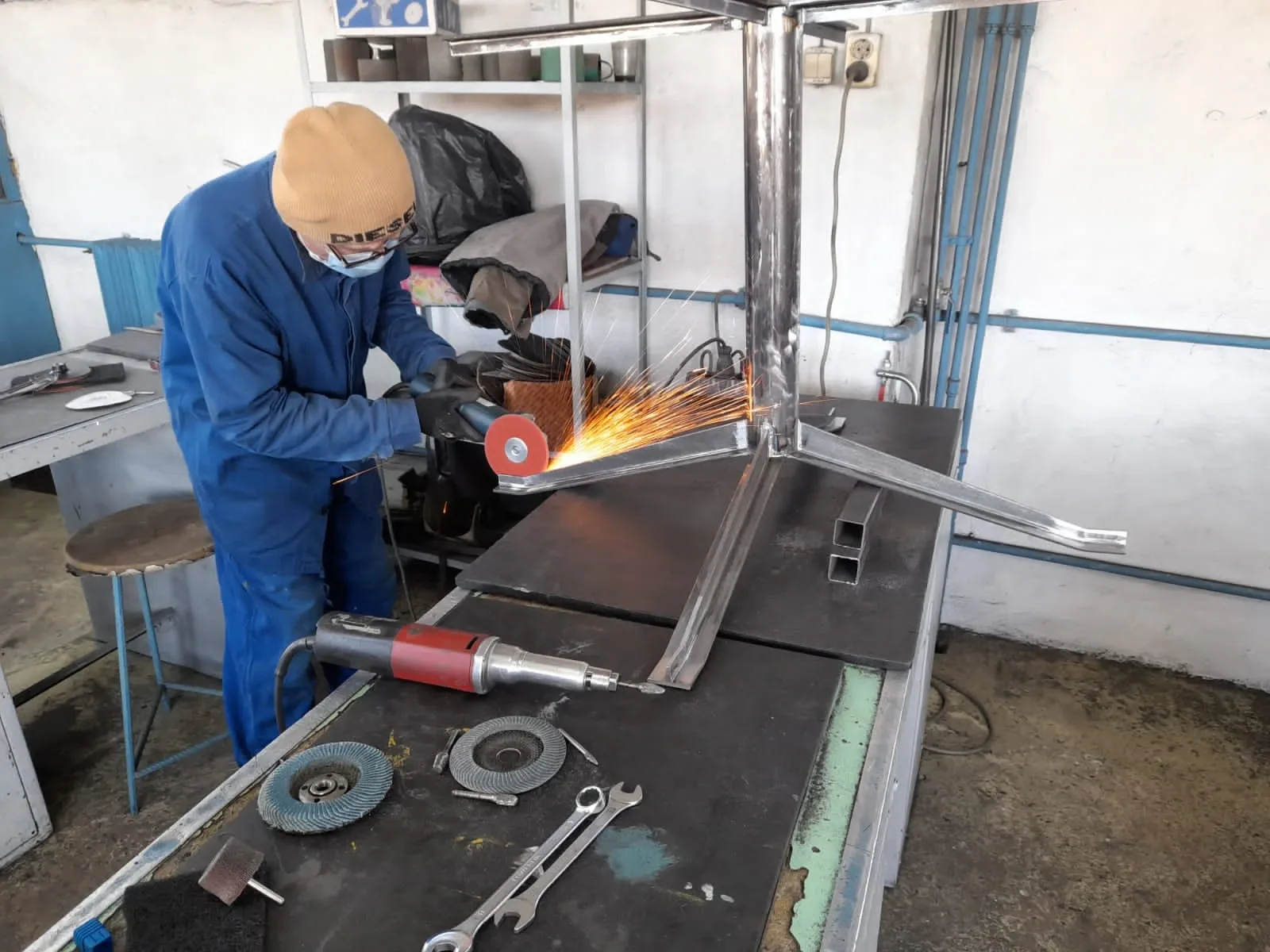
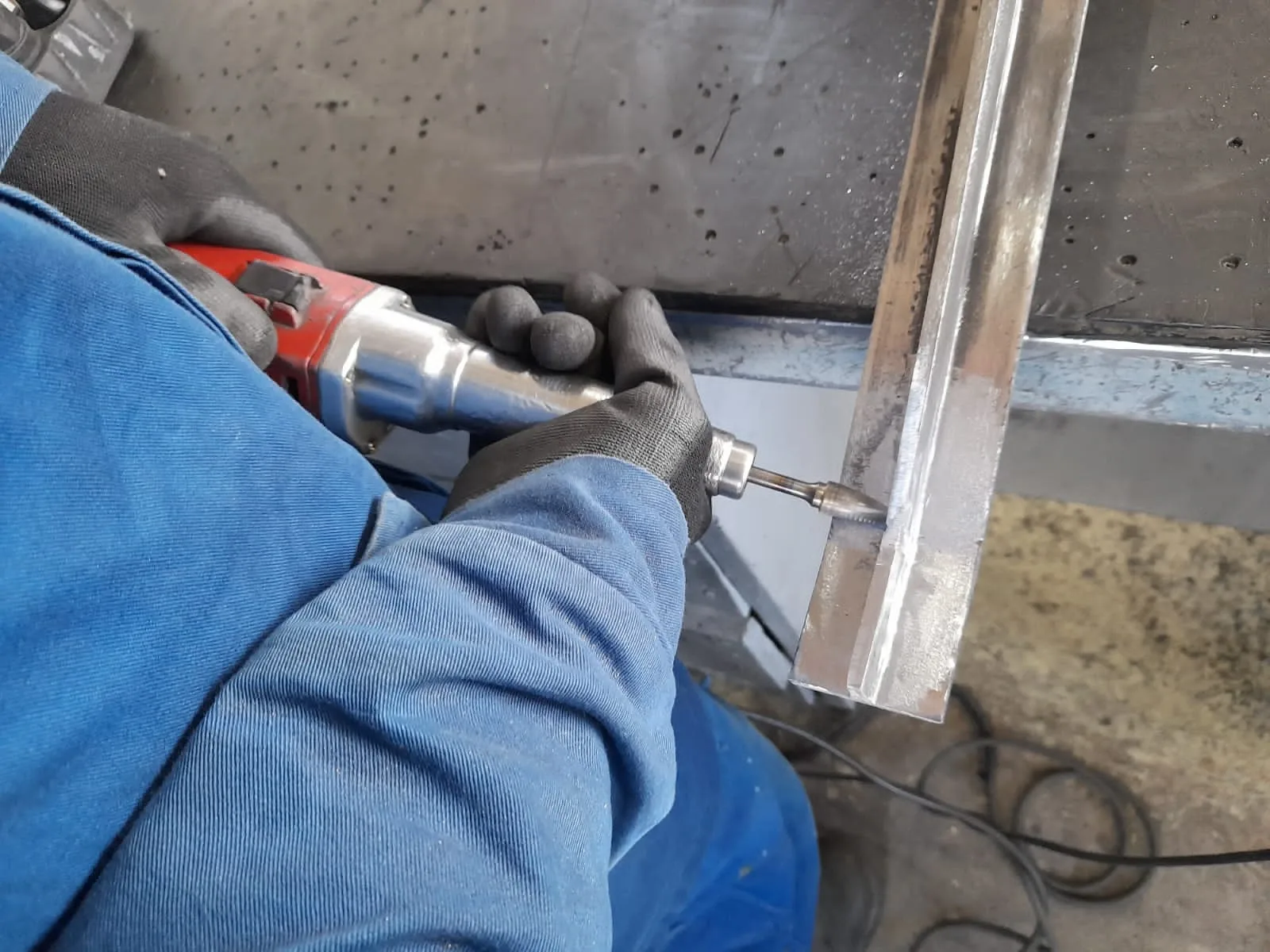
Steel is easier to work with than other metals such as aluminum: on a piece of steel, weld marks can be polished and minimized to the point of becoming nearly invisible. Welding acts as a kind of magic glue, making the plasticity of steel almost infinite. This plasticity is further enhanced by other transformation techniques, such as bending or digital cutting. Working with steel thus allows for unrestrained creativity, enabling the design of an endless variety of forms with very clean geometry. This is not the case with aluminum, for example, whose welds are highly visible.
The finishing work on steel allows for various surface treatments, each with its own appeal: powder-coated finishing gives a smooth, uniform colored surface that is sensual to the touch. The raw steel finish, a brushed finish with no added paint (simply a matte anti-rust varnish), gives a more industrial look that reveals the polishing work and certain weld marks, telling the story of the material.
Economic and ecological value: steel has a lower carbon footprint than other metals, such as brass or aluminum. The energy required to produce steel is lower than that required for aluminum. Moreover, steel's recyclability is high (60 to 90% of the metal in Europe is recycled). Steel is recyclable almost indefinitely and extremely durable: a steel piece of furniture can easily last fifty years. Brass and bronze are heavy alloys whose extraction is polluting. Aluminum production is highly energy-intensive.
The powder-coated finish (also called epoxy powder finish) that we apply to most of our furniture is a particularly eco-friendly finish, as it uses no solvents, the excess powder is collected and reused, and it offers lasting protection against corrosion.
Wood
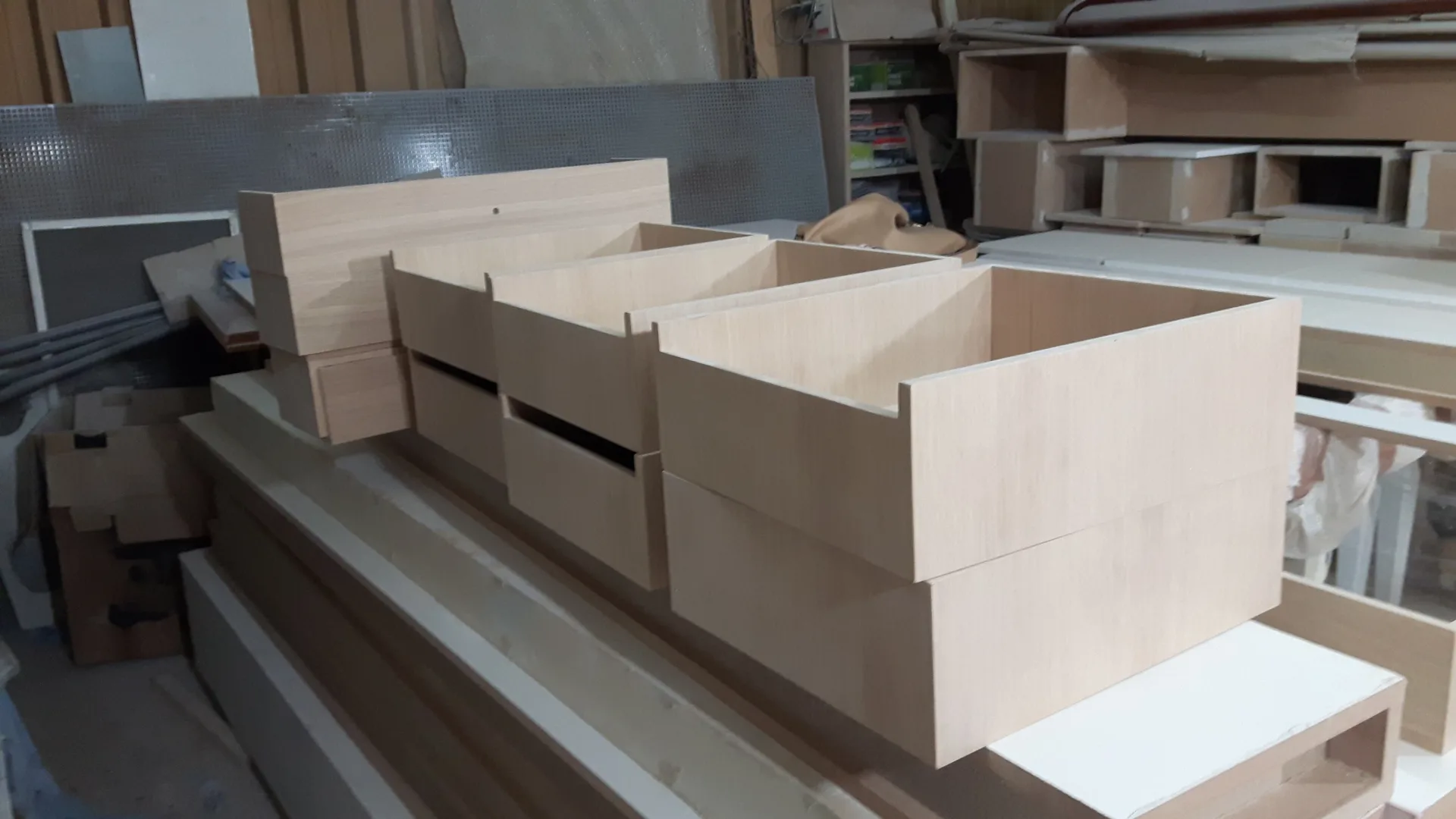
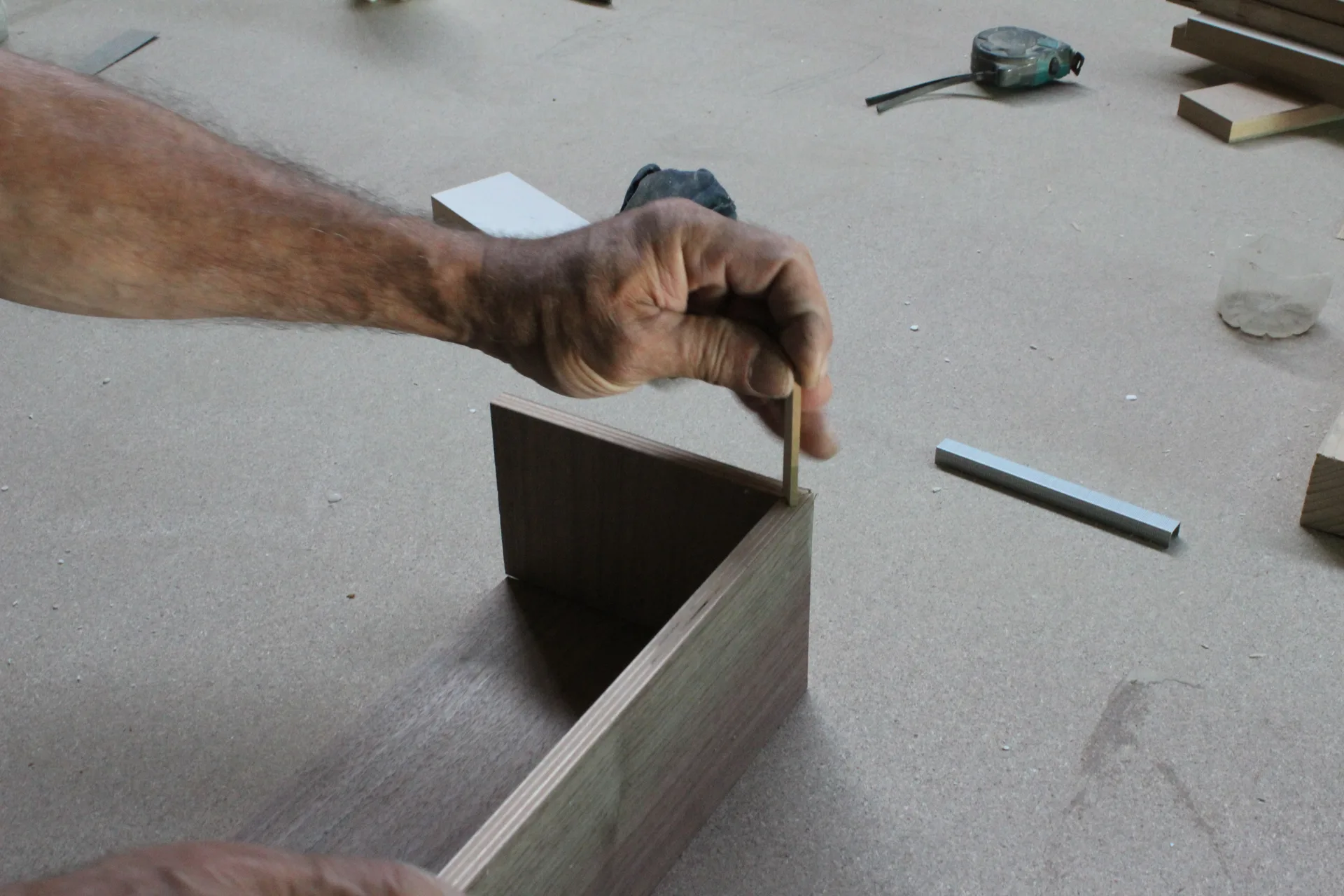
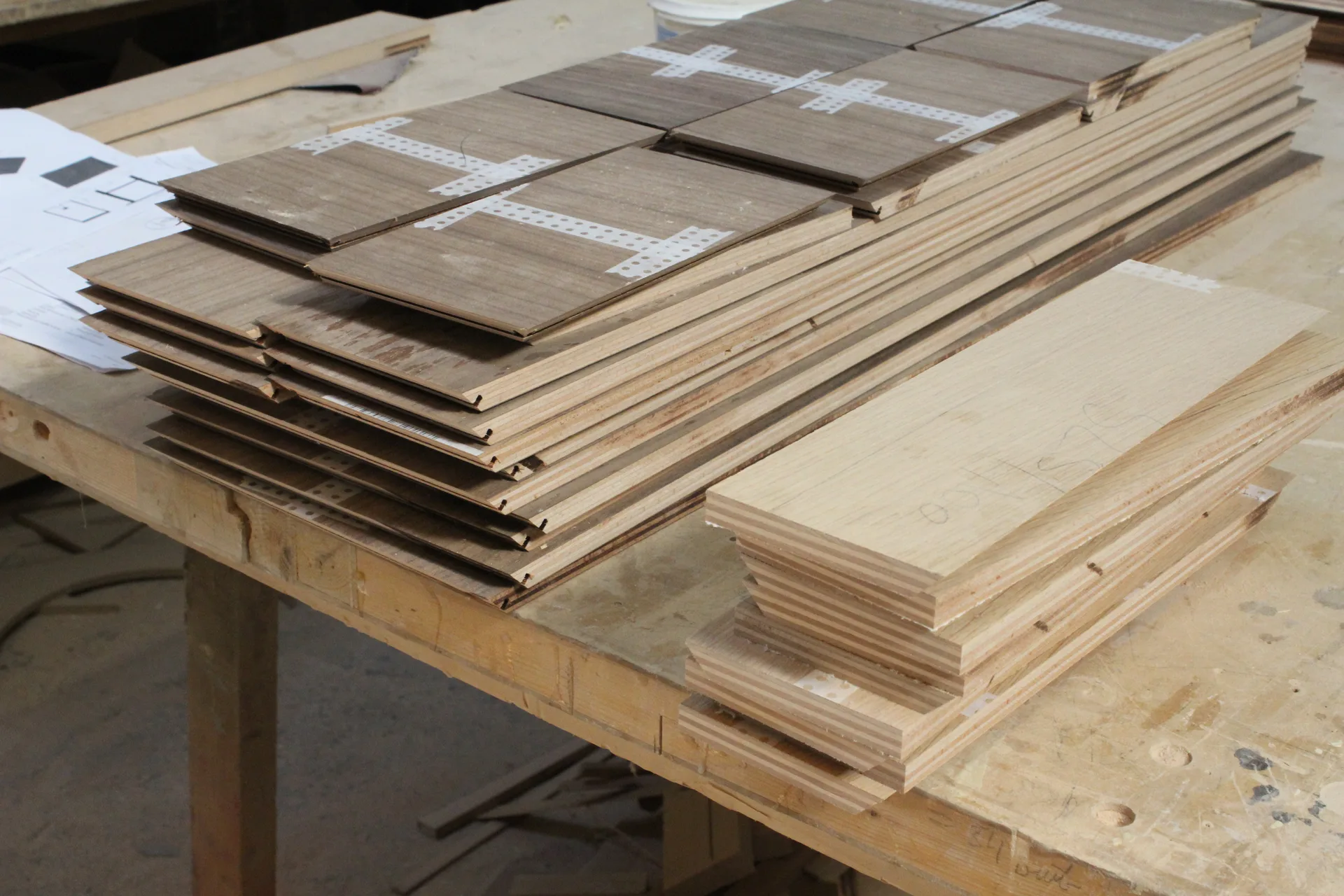
Wood is a very warm and sensual material, a symbolically powerful material that has accompanied mankind since the dawn of time, and is almost indispensable in a home. This is due to its visual texture, drawing rich and varied patterns in warm colors, but also to its tactile feel. I work primarily with two wood species, each with its own personality. These two species, with their contrasting sensory signatures, make it possible to offer two distinct atmospheres and to cater to different consumer tastes:
Oak has a light, cheerful tone with a more linear visual texture.
American walnut has a darker tone and more pronounced grain, drawing more patterns with sharper color contrasts.
Tempered glass
The transparency of glass is an essential quality of this material: it visually lightens the piece of furniture, reducing its perceived bulk. It allows for plays of transparency, partially revealing or concealing the other materials used (wood, steel), as with the Vanneau secretary desk, where the contents of the drawers can be glimpsed through the tinted glass top. The rigidity and strength of tempered glass also make it possible to work with very thin thicknesses; the top of the Séverin coffee table, for instance, is only 8mm thick. Lastly, glass is an easy-to-clean and highly durable material.
Pairing materials
The pairing of materials gives a piece of furniture its soul. The furniture thus becomes a metaphor for the body: just as muscles and organs are held in place by a rigid structure (the skeleton), the "soft" parts of the furniture, more sensual and expressive, more fragile and delicate, are supported and framed by a steel structure. Steel is the skeleton of the furniture, just as bones are the skeleton of the body — with the difference that here the skeleton is embraced and glorified rather than hidden. This externalization of the skeleton thus gives steel a dual function: a structural function, but also an aesthetic and sensual one, where the contrast between cold and warm, smooth and textured, opaque and transparent (in the case of a glass/steel pairing) highlights and brings out the qualities of each material.