Vaneau
Triple glass and metal wall sconce design
790,00 €
In production – available within 6 weeks
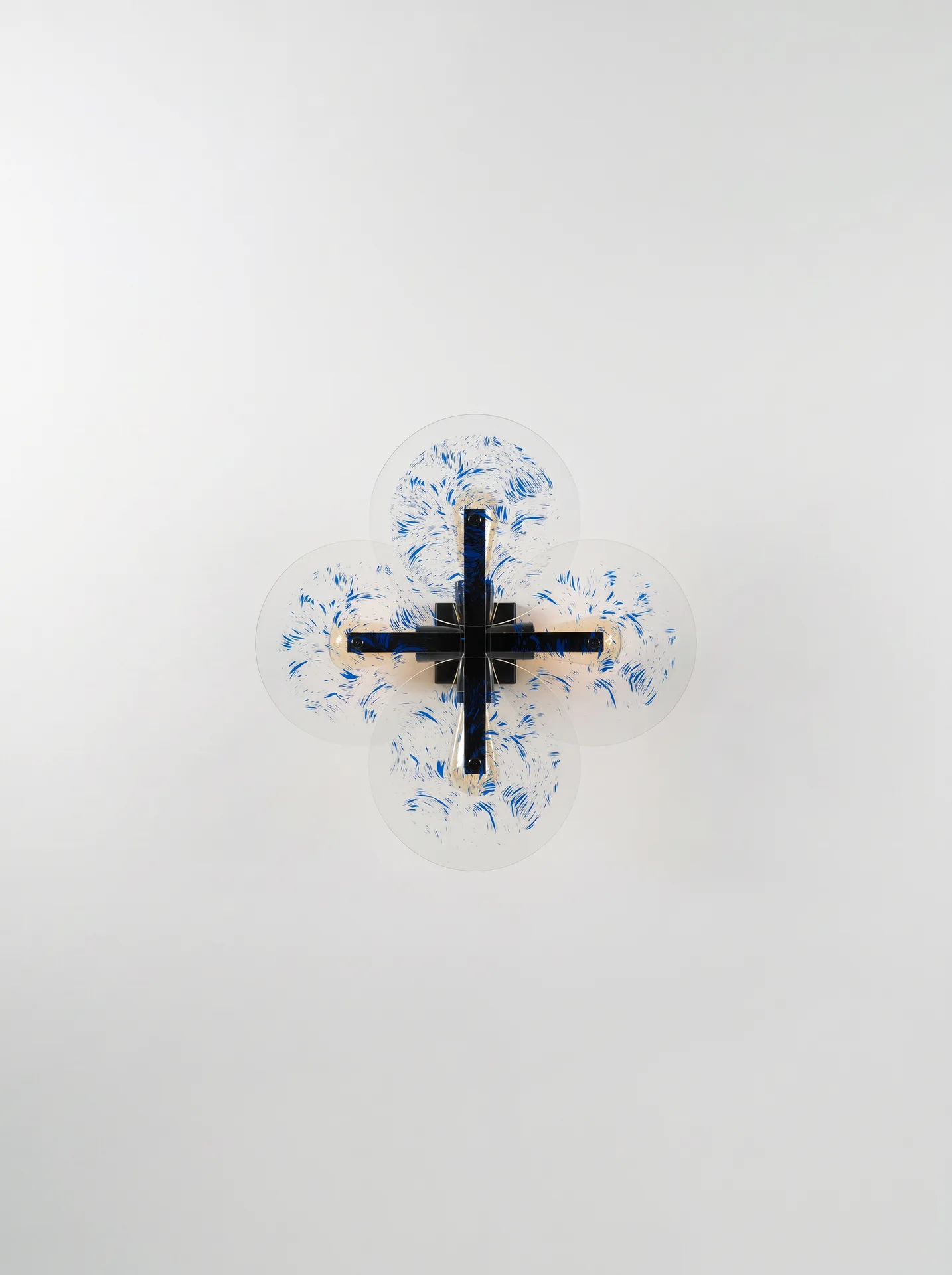
The Vaneau triple glass and metal wall sconce consists of three tempered glass discs mounted on a matte black steel frame. Its sleek and minimalist design gives it lightness and elegance. Thus, a single screw holds each glass disc of the Vaneau triple sconce. Moreover, the welded and hand-polished metal, visible through the tempered glass disc, creates an elegant contrast. However, the tempered glass can also serve as a support for a work of art, which is why we chose to collaborate with the artist Etienne de Fleurieu.
The works of Etienne de Fleurieu +
The three tempered glass surfaces of the triple wall lamp Vaneau, three discs each with a diameter of 250mm, can be adorned with a work by the artist Etienne de Fleurieu. The works are printed directly on an adhesive vinyl which is then applied to the surface of the glass disc. Thus, the Vaneau triple design lamp acquires a dual function: to illuminate, of course, but also to showcase a work of art. When the lamp is lit, the effects of transparency and the projected shadows add an extra dimension to this round glass and metal lamp, making it warmer and more vibrant. When the light is off, the artwork remains visible and takes precedence over the lamp.
A glass and metal wall lamp that fits into a range of furniture +
The Vaneau triple wall lamp in glass and metal, like the entire Vaneau Range, is characterized by a formal unity and a refined design. The Vaneau Range includes more than 15 different pieces of furniture: storage solutions, tables, seating, and lighting.
Materials: a triple lamp in glass and metal +
Our blacksmiths hand-weld and polish the metal arm of the Vaneau triple wall lamp. Then, the metal base is coated with a matte black epoxy finish. The discs are made of 8mm tempered glass, cut with a water jet. The sockets are made of black porcelain, and the electrical cord is a twisted red textile.
Dimensions: Height 25 cm x Length 25 cm x Depth 11 cm
Assembly: 5 minutes. Screw the tempered glass discs onto the matte black metal frame using the provided screw-nut set. The entire unit is then fixed to the wall using three screws. Screws provided (anchors not included).
Delivery times: if in stock, delivered within 1 to 2 weeks. Restocking time: 6 weeks.
Made in the European Union.
Delivery included for France! If in stock, delivery within 1 to 2 weeks.
The Vaneau Range +
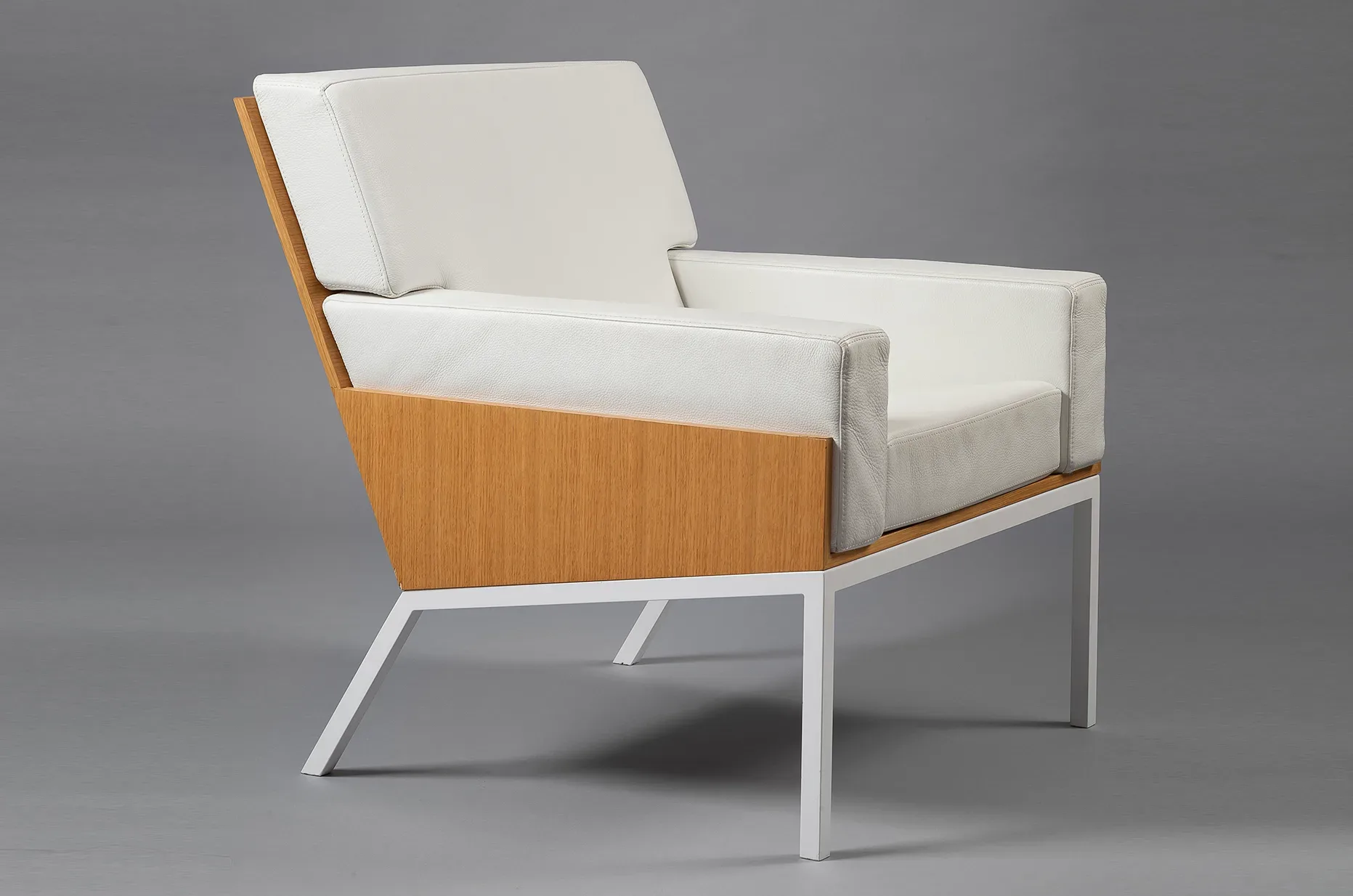
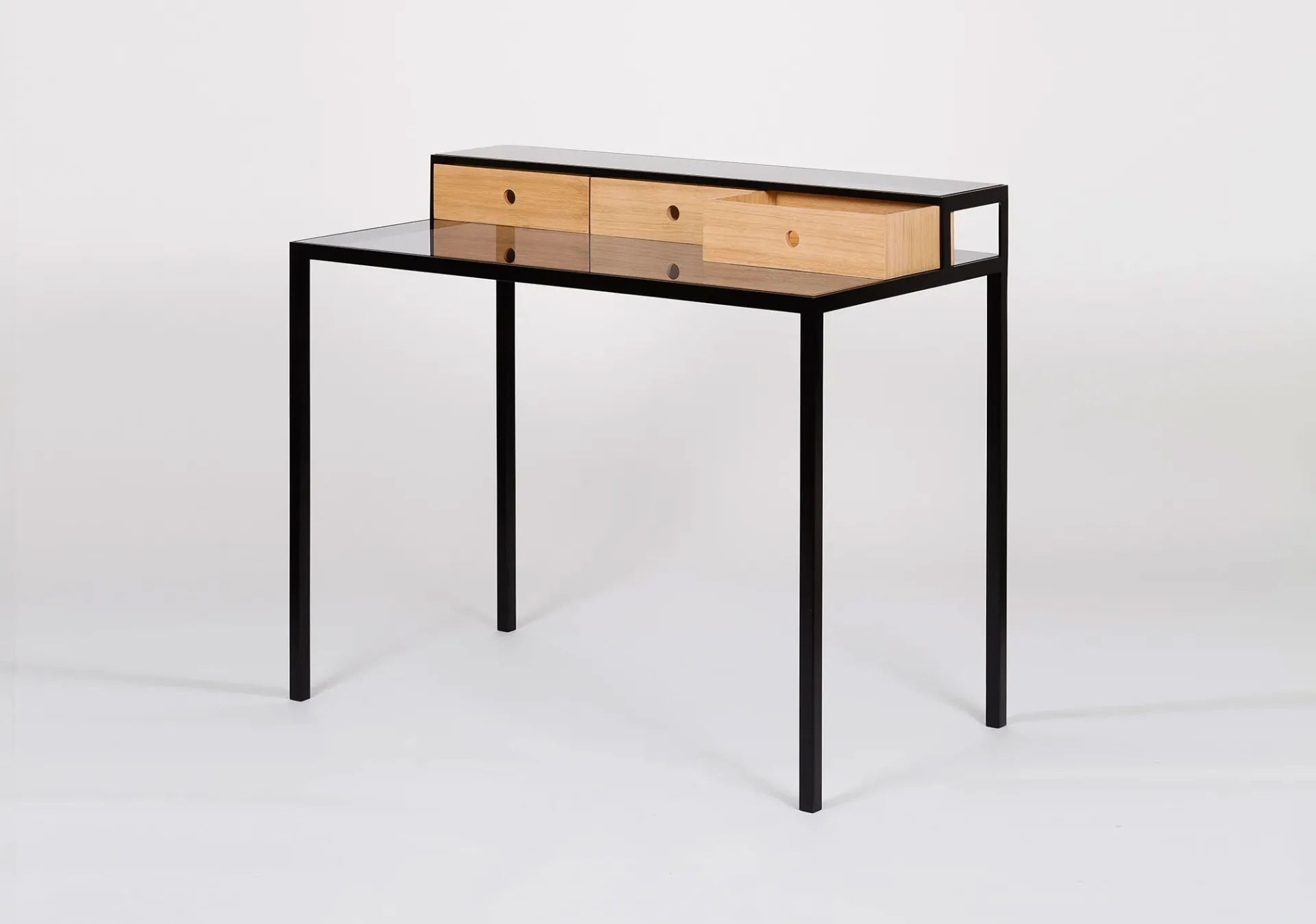
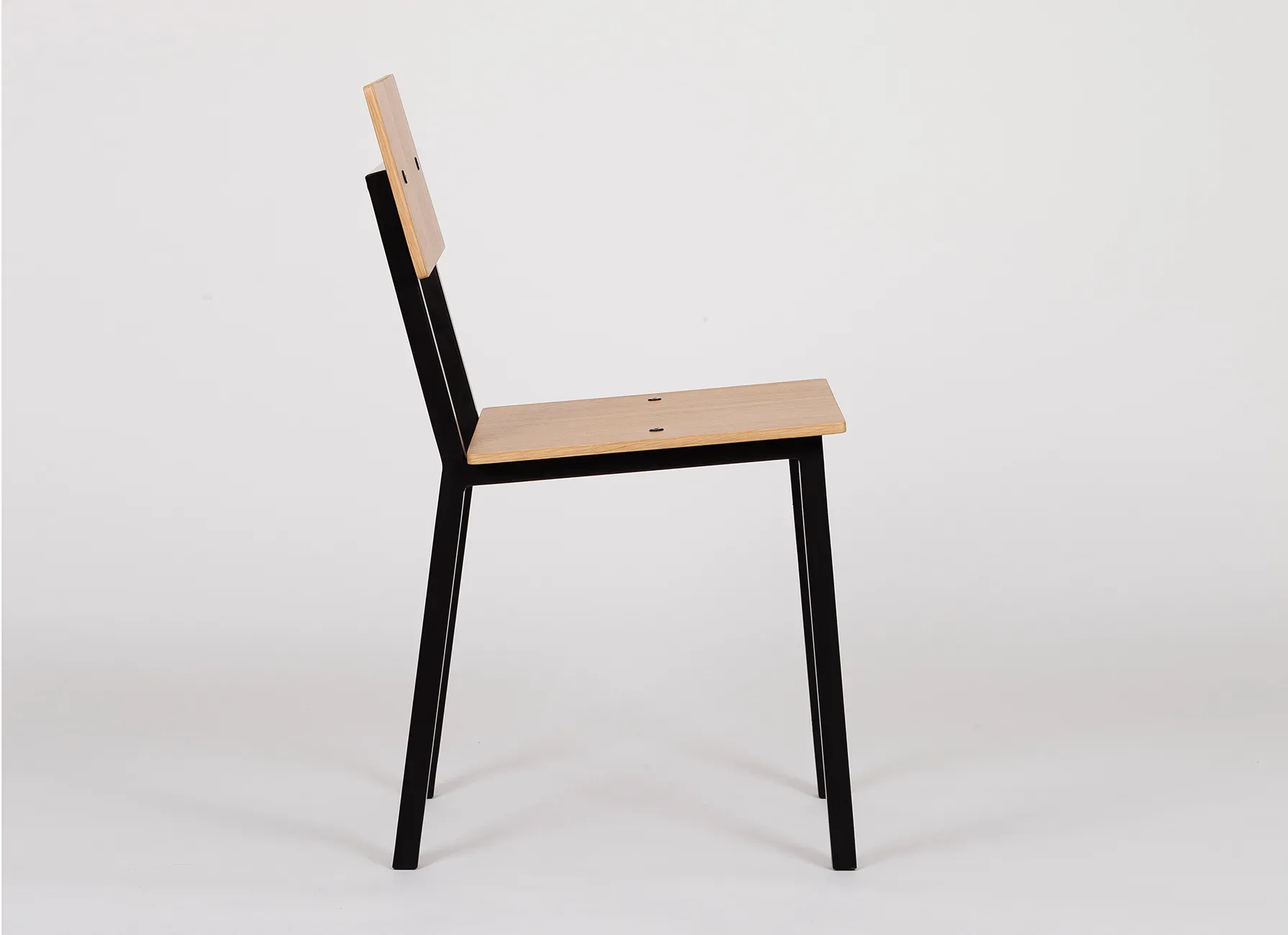
With its refined design and harmonious proportions, the Vaneau glass and metal triple wall lamp perfectly complements the other elements of the Vaneau Range: the Vaneau Secretary, the Vaneau Chaise Longue, the Vaneau Chest of Drawers, and the Vaneau Chair. Thus, the Vaneau Range is characterized by a formal unity and a refined design. It includes about fifteen different pieces of furniture: storage solutions, tables, seating, and designer shelves.
From idea to product, the story of a design +
By Alexandre de Rouvray
"I asked myself the following question: how to design a lamp suitable for the new LED bulbs with warm amber light. Indeed, these new bulbs, unlike filament bulbs that produced an aggressive white light, emit a soft and warm light that can be left as is. Thus, the lampshade, which was a necessity to soften the light from old bulbs, can be eliminated. This creates the possibility to design a lampshade whose function is no longer to filter light, but simply to be a decorative element. Just like the chandeliers of the 18th century adorned with pieces of cut glass, the glass disc serves a purely decorative role here, almost symbolic. Of course, one could argue that the glass has a functional role, as it protects the bulb from shocks that could break it. But its primary role is to serve as a visual frame that highlights and showcases the bulb behind it. Thus, the Vaneau glass and metal lamp was born from the meeting of a new technology (the amber LED bulb) and a more classic form (the lampshade). This concept of the lampshade as a decorative element can be pushed even further: indeed, the glass can be dressed with a graphic or a work of art. This adds visual richness to the Vaneau lamp when it is off, but also when it is on, the light passing through the graphic giving it a new life, projecting shadows and colors on the surrounding walls. Like the other furniture in the Vaneau Range, the round black glass and metal Vaneau lamp is characterized by the use of square tubes of 25mm. Thus, a formal unity is born among the different pieces of the range."
A 1950s design lamp +
The design of the Vaneau lamp is inspired by the great masters of modernism and the 1950s: Charlotte Perriand, Jean Prouvé, Pierre Chareau, as well as Jean-Michel Frank and Le Corbusier. Thus, it is a round, refined, minimalist lamp that uses the least material possible and prioritizes functionality. Indeed, according to the Bauhaus adage, the form of an object must serve its function, and any unnecessary ornamentation must be rejected. As Dieter Rams aptly puts it, "less is more": with less, we achieve more.
Moreover, the expressiveness and charm of the product should come from the richness of its materials and finishes, rather than from a gratuitous form. This is what Jean-Michel Frank referred to as "poor luxury": the luxury of material contrasting with the purity of form. Or to put it another way, the expressiveness of the material highlighted by the discretion of the form. Finally, this vintage design lamp also draws inspiration from the work of American minimalist sculptor Donald Judd. His levitating, refined forms, notably his sculpture Untitled 1967 (stacks), serve as an aesthetic starting point in the design of this modern and elegant lamp. Thus, the work of designer Alex de Rouvray is part of the modernist movement of the 20th century.
Modernism +
With the advent of new industrial production methods, a new profession, design, and a new philosophy of form emerged at the beginning of the 20th century: modernism. The form must serve the function, "form follows function". The industrial world, like the animal world, must eliminate the superfluous: objects will be devoid of ornamentation, using only the minimum material, the "just necessary". This approach to design as the art of purity has been well summarized by Ludwig Mies van der Rohe: "less is more". By removing the superfluous, one provides both emotional and rational satisfaction to the observer: the pleasure of a simple form, and the demonstration of a resolved equation. For purification requires, from the designer, an intimate understanding of the essential structure of the object: which elements are indispensable, which thicknesses can be reduced, which pieces can be simplified or eliminated. However, modernism should not be perceived as an austere approach, as a true sensuality can arise when the expressiveness of a beautiful material is added to the minimalism of form. The warmth of wood, the brilliance of glass, the elegance and strength of steel are the vectors of a powerful aesthetic emotion.